Paper Cutting Machine for Notebooks – Features, Types, and Maintenance
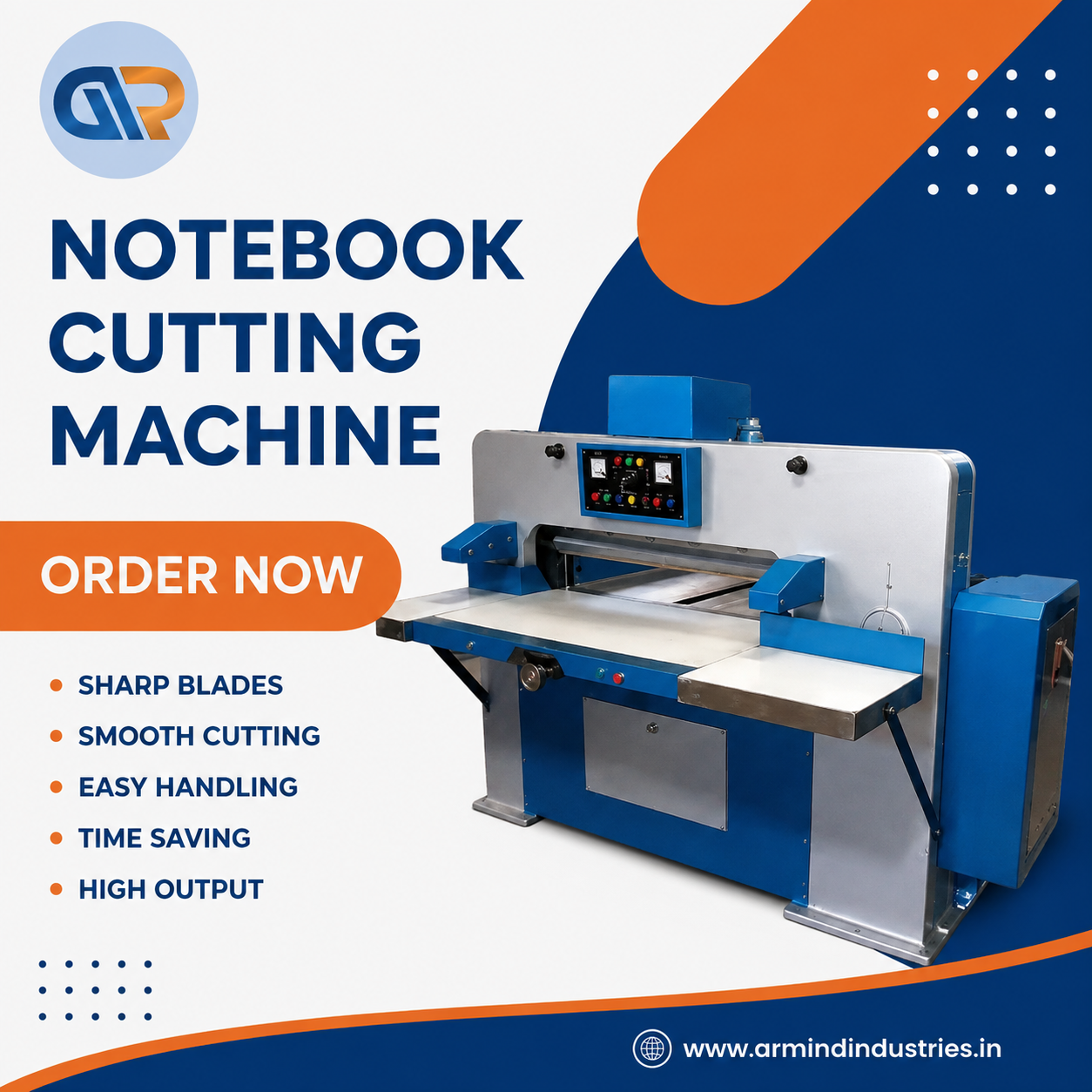
A paper cutting machine is the backbone of any notebook manufacturing unit. From cutting raw paper sheets to the final trimming of finished notebooks, this machine plays a crucial role in determining product quality and production efficiency. This comprehensive guide covers everything you need to know.
Types of Paper Cutting Machines
Guillotine Cutter: The most common type. Uses a straight blade that cuts through stacks of paper in a single stroke. Available in manual, semi-automatic, and fully automatic versions. Cutting widths range from 30 inches to 72 inches.
Three-Knife Trimmer: Specifically designed for trimming book blocks after binding. Cuts three sides simultaneously for perfect square edges.
Rotary Cutter: Uses a circular blade for continuous cutting of paper rolls. Ideal for high-volume operations that use roll-fed paper.
Key Features to Consider
- Cutting Width: Should match your maximum paper size (43 inches/109cm is standard for notebook manufacturing)
- Cutting Height: Maximum stack height the machine can cut (4 inches/10cm is typical for most operations)
- Programmable Cutter: Stores common cutting patterns for repeatability
- Safety Features: Light curtains, dual-hand operation, blade guards, and rear covers
- Clamping System: Hydraulic or mechanical clamping to hold paper firmly during cutting
Maintenance Tips
Blade Sharpening: Sharpen blade every 15,000-20,000 cuts. Use a professional sharpening service for best results.
Cleaning: Remove paper dust and debris daily. Clean the cutting stick regularly.
Lubrication: Oil moving parts weekly as per manufacturer recommendations.
Calibration: Check and adjust back gauge alignment monthly for accurate cuts.
Safety Checks: Inspect safety systems daily. Never bypass safety features.
Investment Range
Manual guillotine cutters: ₹50,000-1.5 lakhs. Semi-automatic programmable cutters: ₹2-5 lakhs. Fully automatic hydraulic cutters: ₹4-10 lakhs. Three-knife trimmers: ₹3-8 lakhs.