
Armind Industries
Notebook Machine Manufacturer
June 24, 2026 Armind Industries
India's stationery market is growing at 12-15% annually, driven by increasing literacy rates, government education initiatives, and the rise of organized retail. Starting a notebook manufacturing business can be a profitable venture with the right planning and equipment. Here is a step-by-step guide to get started.
Identify your target market – school notebooks, college notebooks, corporate diaries, or specialized notebooks. Analyze competitors in your region. Create a business plan covering initial investment, monthly operating costs, projected revenue, and breakeven timeline.
Register your business as a sole proprietorship, partnership, or private limited company. Obtain GST registration, MSME/Udyam registration, and trade license from your local municipality. For manufacturing, you may need consent from the pollution control board.
You need a minimum of 500-1000 sq. ft. space for a small-scale setup. The location should have good road access for raw material delivery and finished goods dispatch. Ensure proper electrical wiring for industrial machinery (3-phase power recommended).
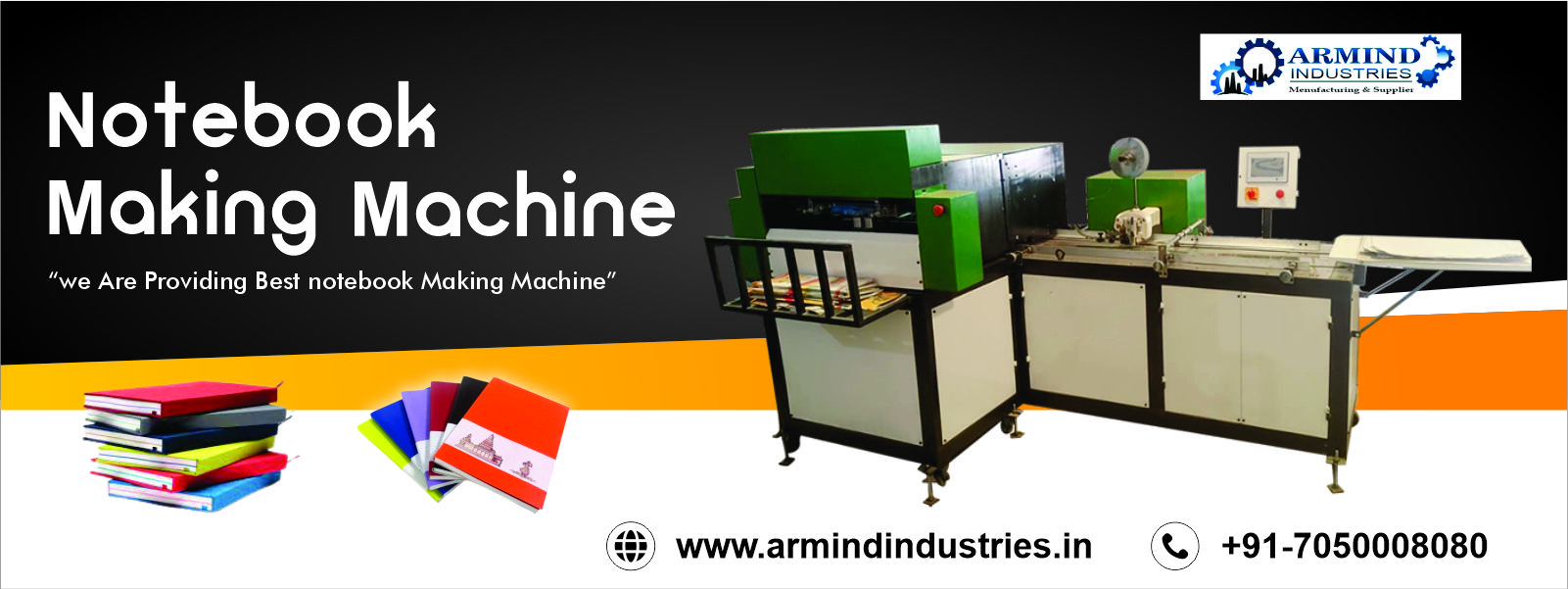
For a basic notebook manufacturing setup, you need: Notebook Cutting Machine (₹1-2 lakhs), Notebook Stitching Machine (₹60,000-1.5 lakhs), Notebook Edge Squaring Machine (₹2-3 lakhs), and optionally a Spiral Binding Machine (₹30,000-2 lakhs). Total machinery investment: ₹4-8 lakhs for a basic setup.
Source paper from local dealers or directly from paper mills. Common paper types: 60-80 GSM for inner pages, 200-300 GSM for covers. You also need binding wire, spiral coils, glue, and packaging materials.
The typical production flow: Paper cutting → Printing (optional) → Cover making → Gathering pages → Stitching/Binding → Edge squaring → Quality check → Packaging.
Distribute to local stationery shops, wholesale distributors, school suppliers, and government tenders. Create a website and list on B2B platforms. Offer competitive pricing and maintain consistent quality for repeat orders.
With a small investment of ₹5-10 lakhs, you can start a notebook manufacturing business that generates ₹30,000-1,00,000 monthly profit depending on production capacity.