
Armind Industries
Notebook Machine Manufacturer
June 26, 2026 Armind Industries
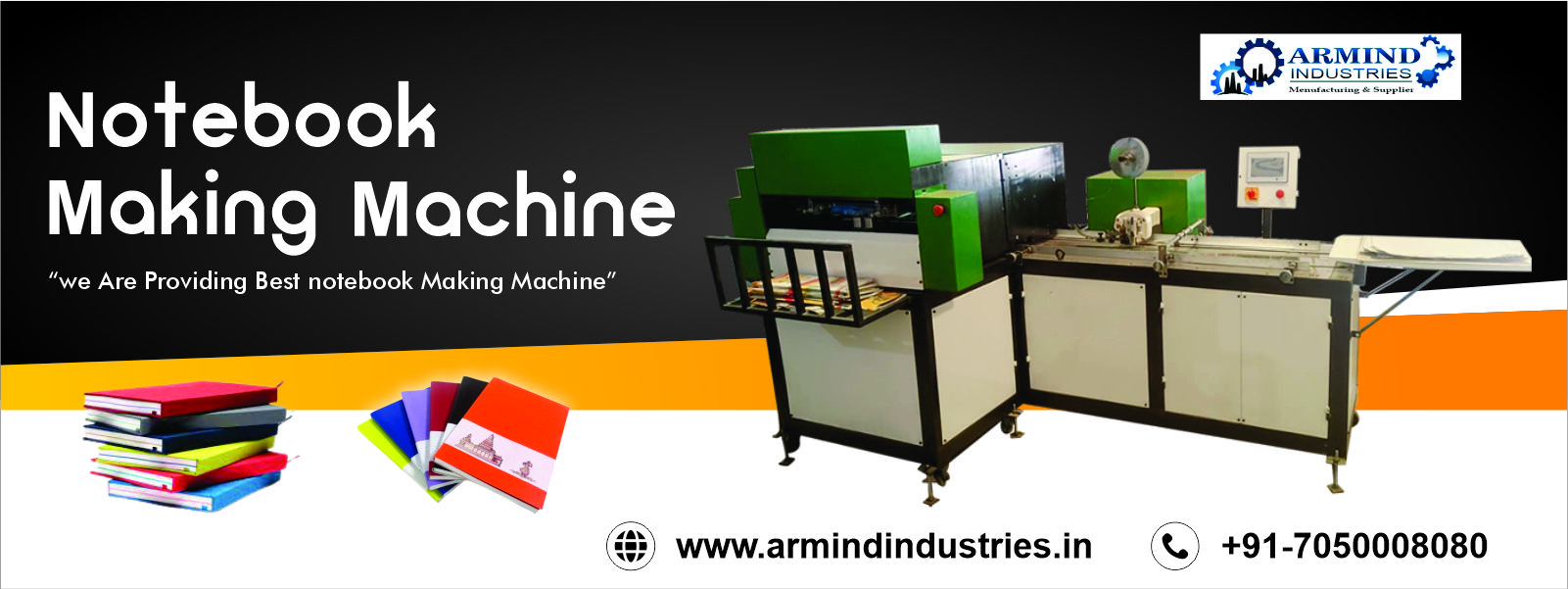
Spiral binding is one of the most popular binding methods for notebooks, diaries, and planners. A notebook spiral binding machine punches holes and inserts spiral coils to create a durable, lay-flat binding that customers love. This guide covers everything you need to know about spiral binding machines for your notebook manufacturing business.
The process involves three steps: first, the machine punches evenly spaced rectangular holes along the binding edge of the paper stack and cover. Second, a pre-formed spiral coil is threaded through the holes. Finally, the coil ends are crimped to prevent unravelling.
Manual Punch & Bind: The most affordable option. You punch holes manually and then insert the coil by hand or with a separate coil inserter. Suitable for very small production runs.
Semi-Automatic: Combines electric punching with manual coil insertion. Can handle 500-1000 notebooks per day. The best choice for small to medium manufacturers.
Fully Automatic: Punches, inserts coils, and crimps automatically. Produces 2000+ notebooks per day with consistent quality. Ideal for large-scale operations.
A basic manual machine starts around ₹30,000, while a fully automatic system can cost ₹2-5 lakhs. Factor in the cost of spiral coils (₹2-5 per notebook depending on size and quality). The ROI for a semi-automatic machine is typically 6-12 months for a small business producing 500 notebooks daily.